Raja Ampat – where coral gardens appear otherworldly
Photos: Miha Gutman, Text: Damjan Gutman
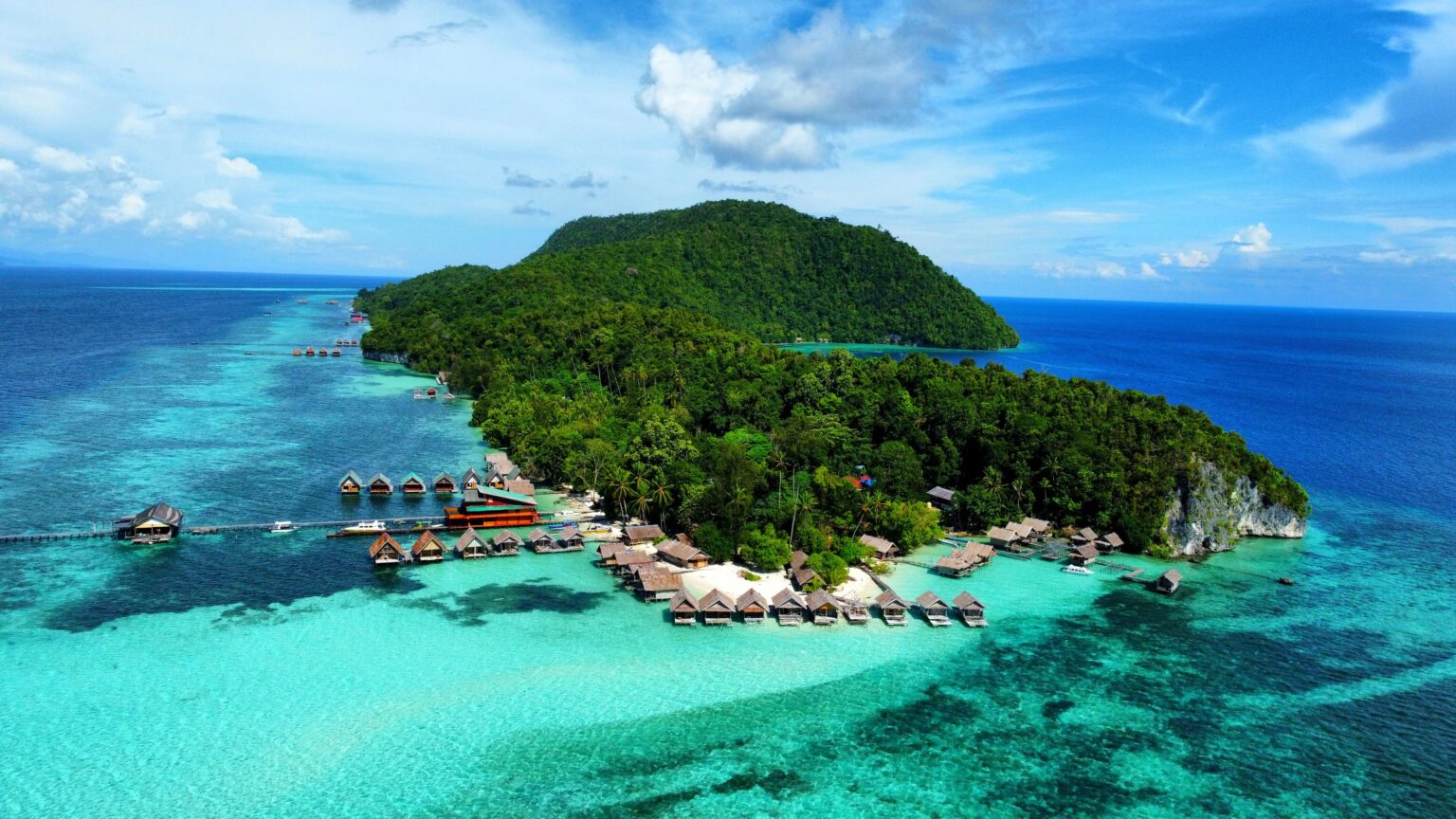
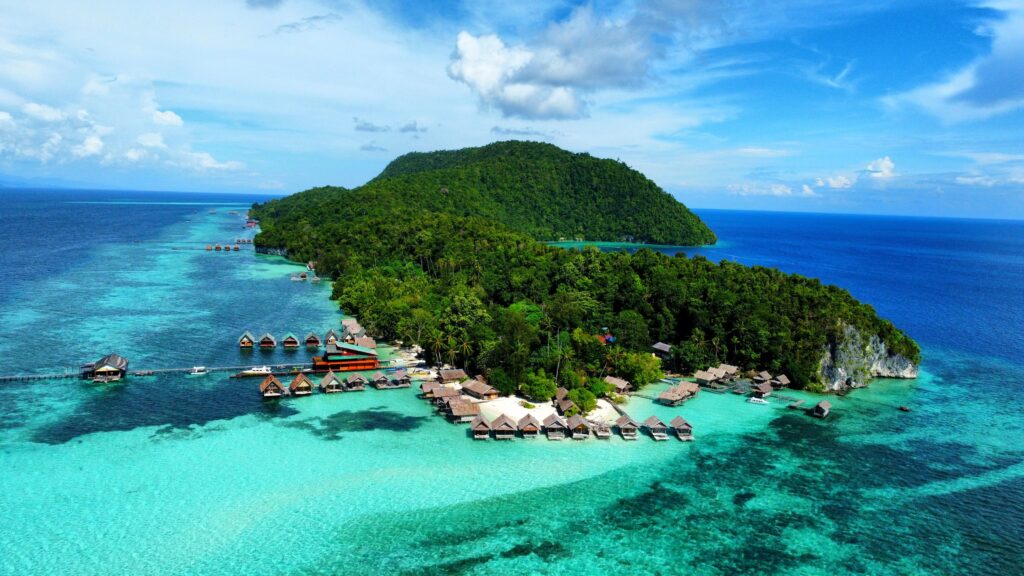
Raja Ampat has long been at the very top of our wish list of destinations to visit. Recently, our dreams finally became reality, and with great expectations, we set off "to the end of the world." Raja Ampat, or in Indonesian "Four Kings," is an archipelago consisting of four main islands and nearly 1,500 smaller ones. They are located just below the equator, northwest of the so-called "bird's head." Just as Slovenia resembles a chicken in shape, West Papua together with Papua New Guinea forms the silhouette of a large bird. Waigeo, Batanta, Salawati, and Misool form a kind of coral triangle with the greatest biodiversity in the world.
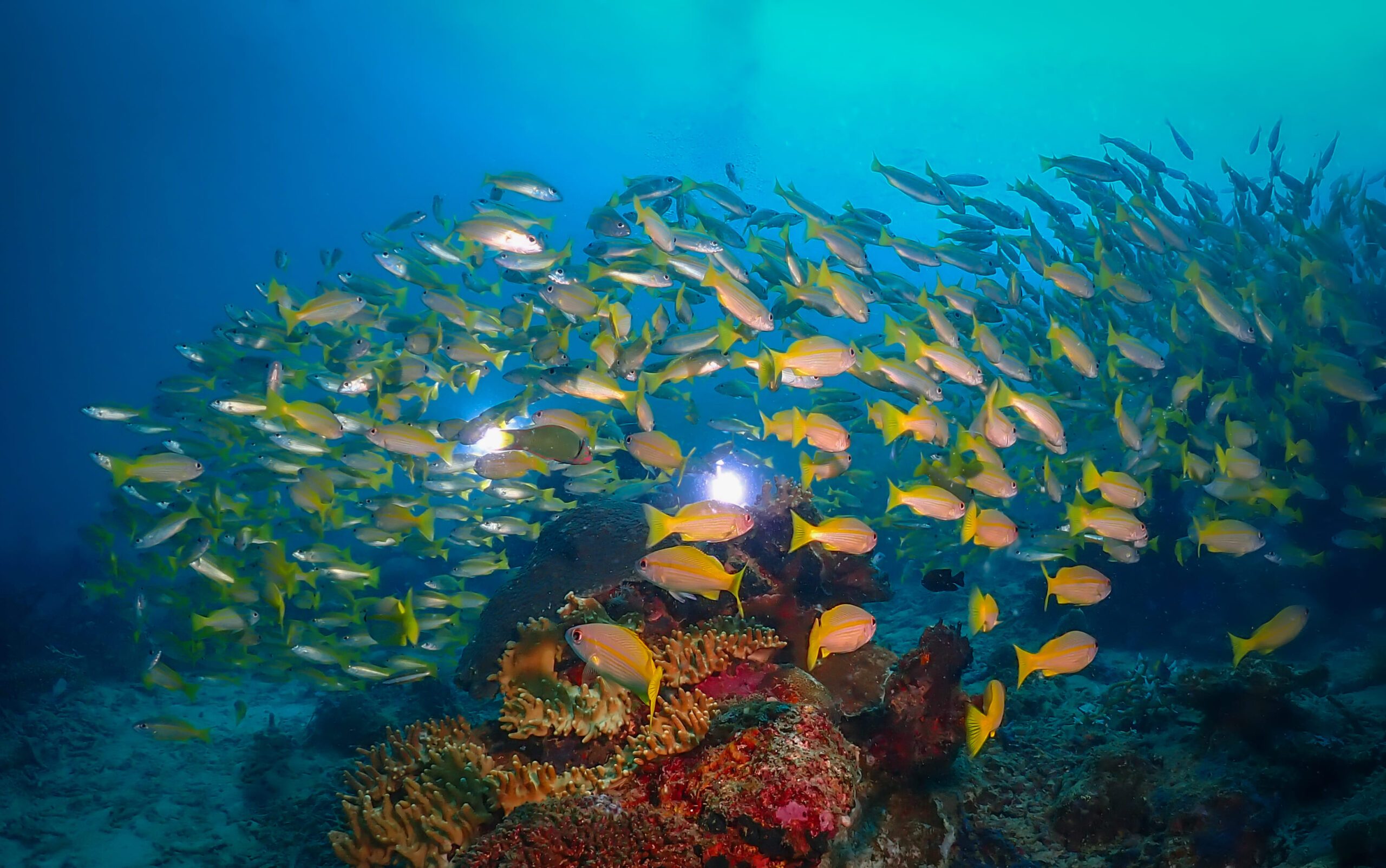
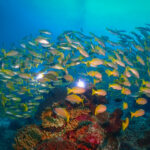
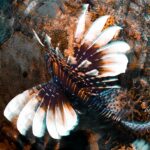
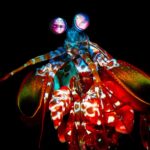
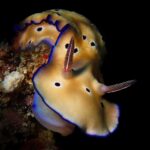
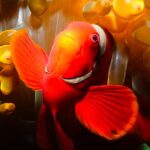
Thousands of marine organisms – from tiny crustaceans, colorful snails, and countless coral fish, all the way to elegant manta rays and the king of tropical seas, the whale shark – share the same space here.
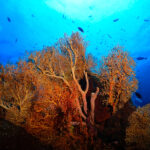
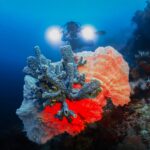
There are also endless, pristine gardens of healthy corals, so intensely colored that they surpass even James Cameron’s iconic film Avatar: The Way of Water.
Our special wish was to find and successfully photograph the master of camouflage – the pygmy seahorse (Pygmy seahorse), only a few millimeters in size.
Due to the exceptionally long and demanding journey, we decided to make a brief stop in Kuala Lumpur. From there, we continued our adventure via Jakarta to the capital of West Papua, Sorong. After a short break, we boarded the morning ferry to Raja Ampat and the town of Waisai, which serves as the starting point for our final destination – one of the islets of the last paradise on Earth.
Although the Dutch diver Max Ammer discovered the Raja Ampat archipelago in 1990 while searching for sunken World War II planes, diving tourism only began to develop about ten years later. Initially, there were only a few simple eco lodge accommodations on the islands, while diving locations were mostly accessible from wooden boats that toured the most attractive spots in seven to ten days.
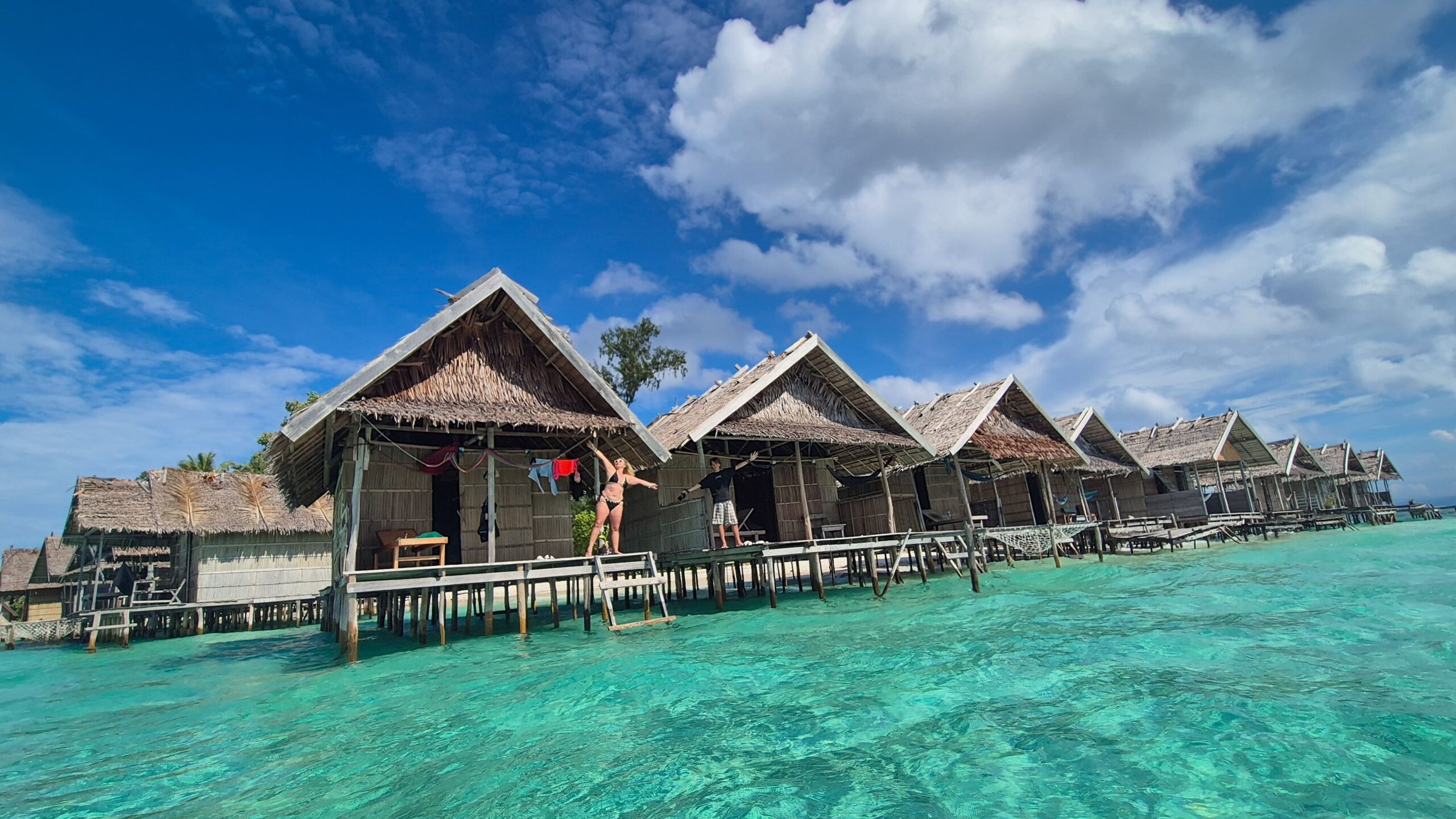
Even though accommodations on stilts along steep coasts, as well as liveaboard boats, represented a significant financial outlay, the area successfully resisted mass tourism for a long time. In recent years, the concept of homestays has emerged, making Raja Ampat more accessible to adventurous backpackers with a somewhat shallower pocket. Many local residents have built additional bungalows next to their simple wooden houses above the coral reefs and started offering tourist services. However, not even the last paradise has completely escaped mobile signal and social networks—arrangements via WhatsApp now facilitate access to even the most hidden corners. Despite a greater number of accommodation providers, it is almost essential to arrange everything in advance, as transport between islands is carried out by long, narrow boats with very limited capacity. There are no regular lines; the boat from the accommodation travels exclusively to Waisai port and back, or possibly to the next agreed destination. Transport is not cheap, and searching for accommodation "blindly" rarely pays off—neither financially nor in terms of time. As you may have already experienced, promotional photographs often differ from reality. This is something one must accept. After a long and exhausting journey, the boat—with a bit of luck that you are not completely wet and your luggage has remained dry—finally brings you to a wooden cabin raised on dozens of stilts above a magnificent coral reef.
We were fortunate. We moved into a charming little house, exactly as we had imagined. Moreover, the position itself and the view from the small wooden terrace were simply magical. The modest interior, which contained only a bed and a small wooden table, did not bother us at all – the terrace above the turquoise sea compensated for everything. Upon arrival, it was high tide, and soon, just below the balcony, by the steps leading into the warm sea, a blacktip reef shark came to greet us.
It was lunchtime, and a cordial Papuan man with strong, sun-bleached curly hair was already calling us to the table. There is no choice of food here. Three meals a day are included with the accommodation reservation, but the menu depends on the weather. The weather determines whether one can go fishing or get vegetables in distant Waisai. What is available is prepared. As a last resort, fried bananas and instant noodles are always an option. We were lucky – the food was delicious and surprisingly varied.
We also met a few travelers from neighboring houses, and the conversation quickly turned to activities and plans for the days ahead. Although sometimes it wouldn’t be bad to just lie in a hammock and relax with a view of fifty shades of blue, it seemed a waste of time – we had come so far with a clear goal: to explore the underwater world.
The very next morning, the long-awaited moment arrived—our first dive. Given our experience, large number of dives, and instructor licenses, we had a certain “advantage”: a check dive was not required, and we were assigned a guide exclusively for the three of us.
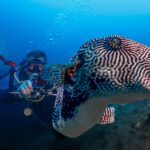
The first few minutes brought a smile to our faces. The coral gardens, resembling opulent aquariums, completely captivated us, while Miha, with his camera, had so much work that he didn’t even notice how sixty minutes flew by. And so many motifs remained unrecorded. On the boat, we all agreed on one thing – we couldn’t wait for the next dive.
The dives followed one after another, each more beautiful and interesting than the last, and Miha diligently filled the memory card of his Olympus. A whole collection of fascinating shots was created, but only one was missing – the famous pygmy seahorse. As it soon became clear to us that we probably wouldn’t find it ourselves, hidden in a large fan gorgonian, the pressure on the guide grew day by day. We chose locations based on recommendations from diving articles, increasing the attractiveness of each subsequent dive.
The forecast for the next day was ideal, and there was no longer any doubt – we were heading to the Pyanemo archipelago, a two-hour drive away, and the legendary dive site Melissa’s Garden. The excitement grew by the minute as the boat quietly and easily cut through the waves. According to experienced divers, this is one of the most beautiful coral gardens in Indonesia, if not the world. When the guide added that he could almost certainly promise to find our sought-after seahorse, we could barely contain our enthusiasm.
Mask on face, regulator in mouth, we sit on the edge of the boat and wait for the signal. Three, two, one – we synchronously roll backward into the water. We descend along the slope to a depth of twenty meters, surrounded by an explosion of colors and life. The guide shot off like a torpedo towards a huge purple gorgonian, searching with a lamp and a thin aluminum stick. After a few seconds, he began to gesticulate wildly – we immediately knew he had found it.
Even Miha, with his young eyes, had difficulty framing the tiny, shy seahorse. I, aware of my eyesight, decided it would be wiser to look at it on the laptop screen in the evening. Miha was breathing like a locomotive from excitement, pressing the shutter like a pinball machine. It paid off – several extraordinary photographs were taken.


But a surprise awaited us at the very end of the dive. During the ascent, at a depth of about ten meters, a view opened up to an endless garden of pristine corals of all possible shapes and colors. Although several meters away, I clearly heard Mateja’s exclamation of delight. In our long diving career, we had visited many of the world’s top destinations, but we had never seen such beauty anywhere.
Sixty minutes flew by this time too. The guide gave the signal to end, but Mateja’s sad look softened him – with enough air in our tanks, we extended the dive for an additional fifteen minutes. Fifteen minutes of pure pleasure.
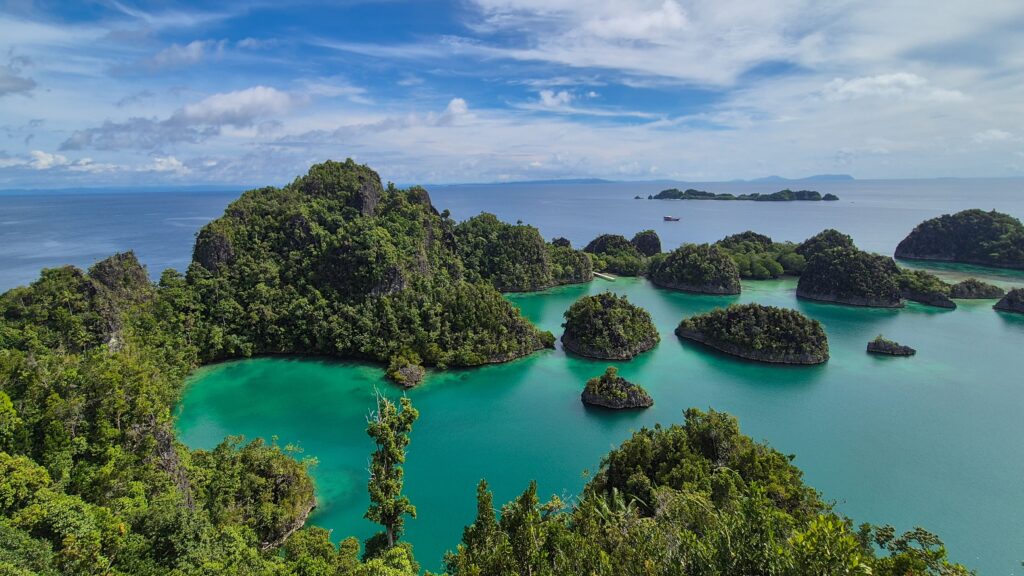
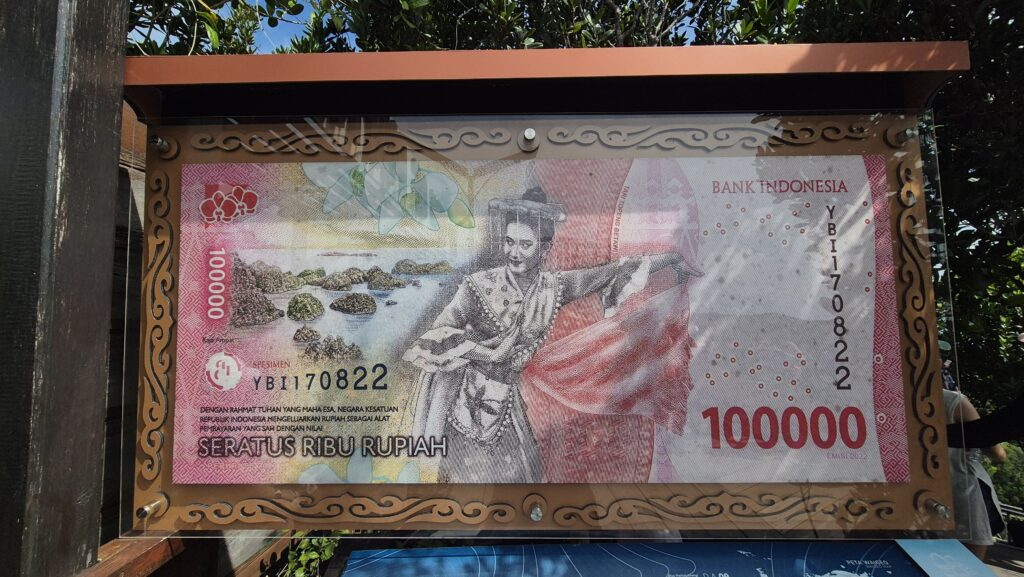
The icing on the cake was the ascent of nearly 300 wooden steps to a breathtaking viewpoint. The mushroom-shaped limestone towers, surrounded by turquoise lagoons, are a sight that has convinced even Indonesians – despite nearly 18,000 islands – to feature the Pyanemo archipelago on the back of their largest banknote, the 100,000 rupiah.
Text and Photos: Julijana Mencin O Mostar now boasts another via ferrata, designed for all enthusias
Photography: Pure Vision Journeys, Text: Mohammad Reza Amirinia At In southwestern Uganda, where mis
Photography: Halla Studio, Martina & Flo, Miha Matavž Photo & Video, Dan Briški, Matevž H